



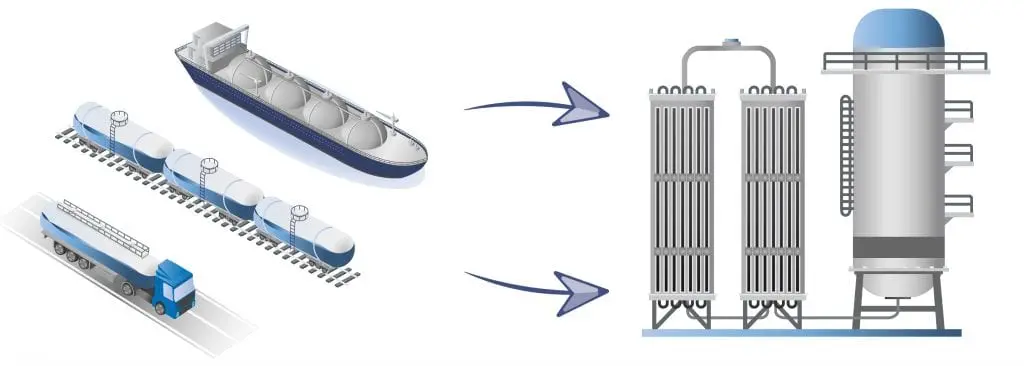
Serbatoi e tubazioni di gas naturale liquefatto (GNL)
Per mantenere il GNL a temperature estremamente basse, il GNL viene tipicamente stoccato in serbatoi a doppia parete o trasportato in tubazioni di GNL con rivestimento sotto vuoto, costituite da due recipienti cilindrici, un serbatoio interno (il recipiente in pressione) e un rivestimento esterno. L'aria nello spazio tra il recipiente interno e quello esterno è nota come spazio anulare, che viene evacuato ad un determinato livello di vuoto per mezzo di una pompa a vuoto per creare il vuoto e fornire un isolamento sotto vuoto per il GNL.
Vuotometri per GNL
The vacuum insulation is a critical element in a LNG tank, making vacuum gauges, vacuum measurement, and vacuum control a top priority. Televac® offers a wide range of analog vacuum gauges and digital vacuum gauges for liquefied natural gas (LNG) applications including our 2A thermocouple micron vacuum gauge, our 2A VacuMini thermocouple micron vacuum gauge, the robust 2V6 thermocouple micron vacuum gauge, the small and portable Vacuguard™ vacuum controller, and the easy to use MX2A active vacuum gauge. For larger installations of liquefied natural gas (LNG) piping, a controller like the MX200 vacuum controller is often used.
Vacuum Controller Solutions

MX200
1*10-11 Torr to 10,000 Torr

MX200 EthernetIP
1*10-11 Torr to 10,000 Torr

MX200 PROFINET
1*10-11 Torr to 10,000 Torr

VacuGuard™
1*10-3 Torr to 20 Torr
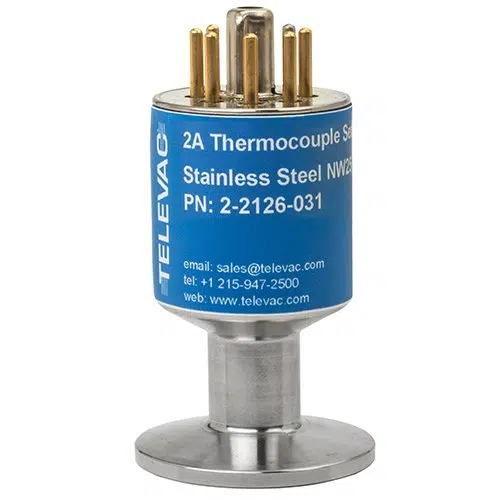
2A Thermocouple (Pirani)
1*10-3 Torr to 20 Torr

2A VacuMini Thermocouple (Pirani)
1*10-3 Torr to 20 Torr

2V6 Thermocouple (Pirani)
1*10-3 Torr to 1 Torr
